You love the look of window shutters, but you don’t want to have a frustrating installation.
Are Window Shutters Hard to Install, and what the installation cost will be?
That depends on measuring, window surface, and your experience.
This guide describes what makes installation easy or hard.
The window shutters I chose aren’t difficult to install, but they’re not foolproof, either.
If your measurements are correct and you have standard windows, you can install them yourself.
Installation is tough on custom size, heavy, or brick mounted shutters.
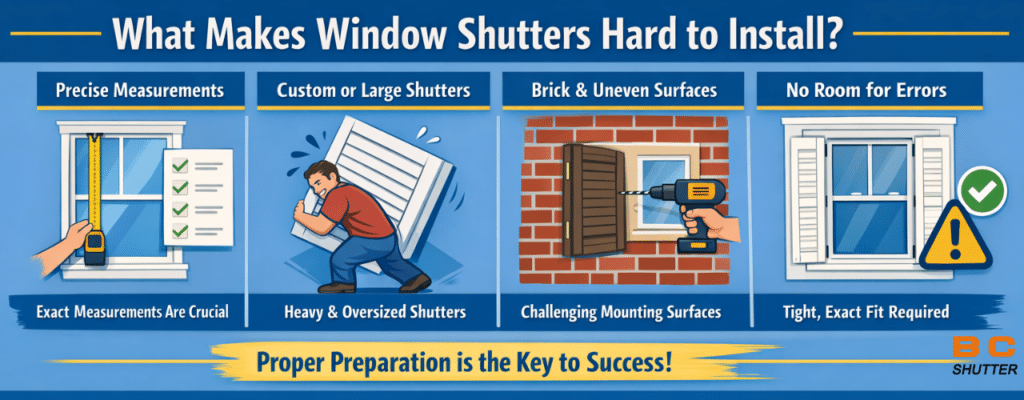
What Makes Window Shutters Hard to Install
Window shutters installation method had a long story.
Shutters, unlike flexible window coverings, require an accurate fit in the opening.
Once it is in place, there is little wiggle room for correcting errors.
It’s part of the reason why preparation trumps physical effort.
Measuring Needs to Be Exact
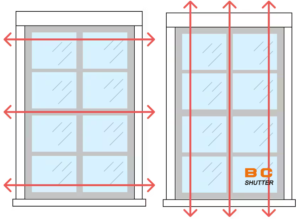
Usually, getting the measurements is the hardest part of shutters.
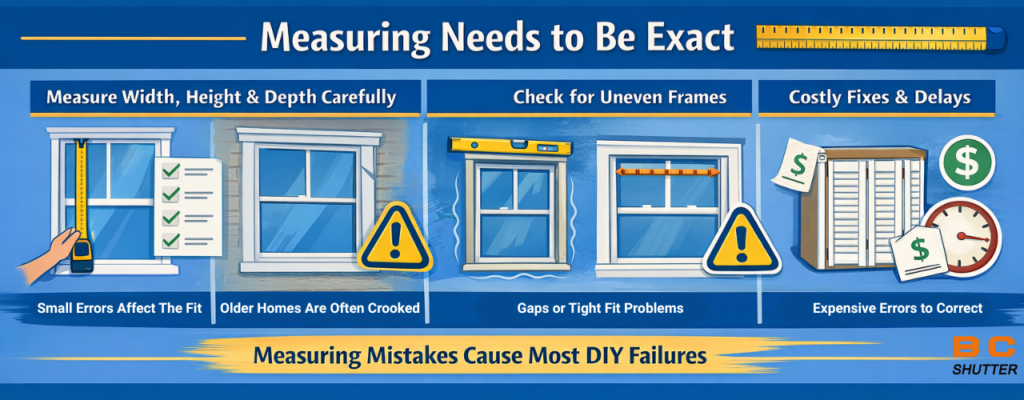
You need to get width, height, and depth right.
The smallest inaccuracies ripple outward to affect the sit of the shutters in the frame.
A couple of millimeters of difference can be enough to cause issues.
Inside-mounted shutters are less forgiving.
They are depending on the window opening to be square.
Older homes often have lopsided frames.
This also complicates accurate measuring.
If measurements are rushed, shutters may not fit.
They can rub against the frame or leave visible gaps.
Once the shutters arrive, fixing this is expensive.
This is why measuring mistakes causes most DIY failures.
Leveling and Alignment Must Be Perfect
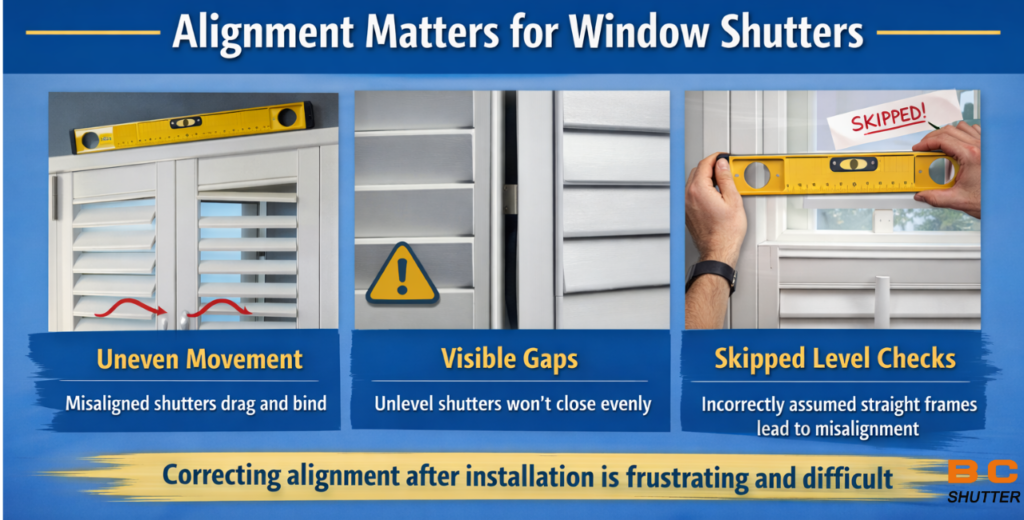
Shutters must be level to function properly.
If the frame is not level, panels will not open smoothly.
You may notice dragging or uneven movement.
This creates frustration after installation.
Alignment affects both function and appearance.
A slightly tilted frame is easy to spot.
Panels may not close evenly.
Gaps become visible when shutters are closed.
Many DIY installers skip repeated level checks.
They assume the window frame is straight.
This assumption often causes problems.
Correcting alignment after installation is difficult.
Drilling Into the Wrong Surface Causes Problems
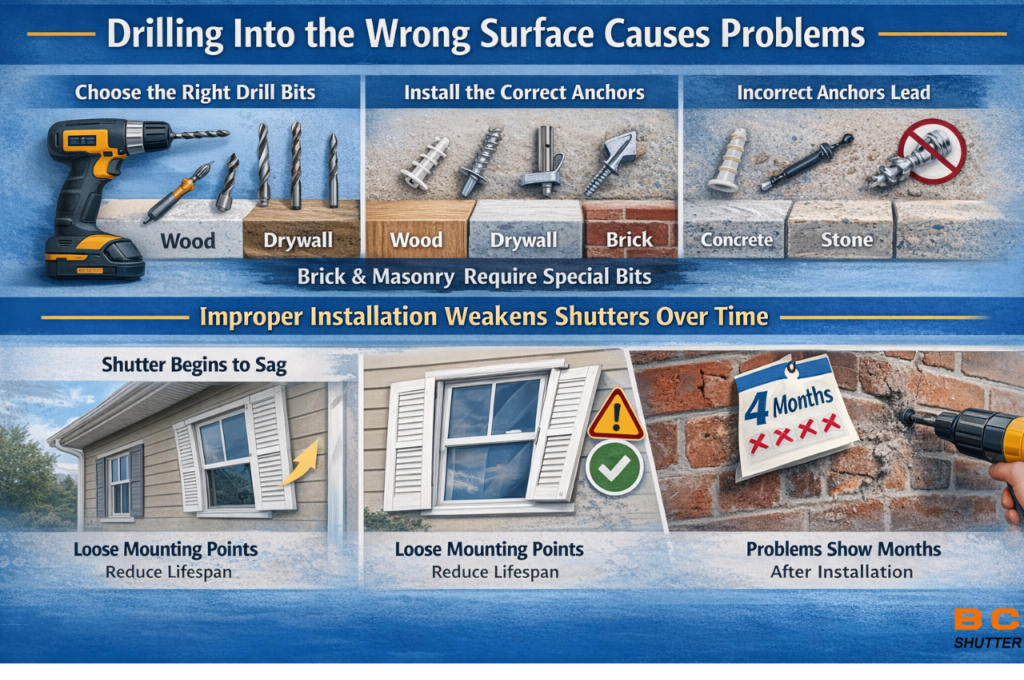
Different surfaces require different drilling methods.
Wood, drywall, brick, and concrete behave differently.
Using the wrong anchor weakens the installation.
This leads to long-term stability issues.
Brick and masonry require proper drill bits.
Drilling too fast can crack the surface.
Incorrect anchors may loosen over time.
Shutters can begin to sag or shift.
Vinyl and drywall also need care.
Drilling without locating solid support causes movement.
Loose mounting points reduce shutter lifespan.
These problems appear months after installation.
Larger Shutters Are Heavy and Hard to Handle
Large shutter panels add physical difficulty.
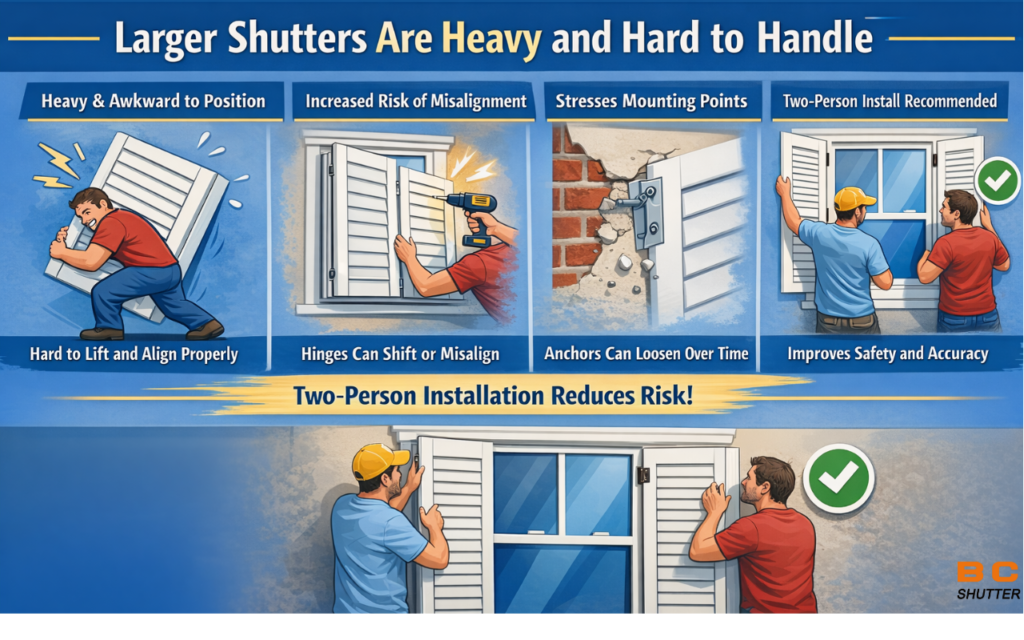
They are heavy and awkward to position.
Holding panels while aligning hinges is challenging.
This increases the chance of errors.
Installing large shutters alone increases risk.
Panels may shift during mounting.
Hinges may misalign under weight.
Once misaligned, smooth operation becomes difficult.
Heavy shutters also stress mounting points.
If anchors are not secure, movement occurs.
This affects long-term performance.
A two-person installation reduces these risks.
Can You Install Window Shutters Yourself?
Yes, it’s often possible to put up window shutters yourself.
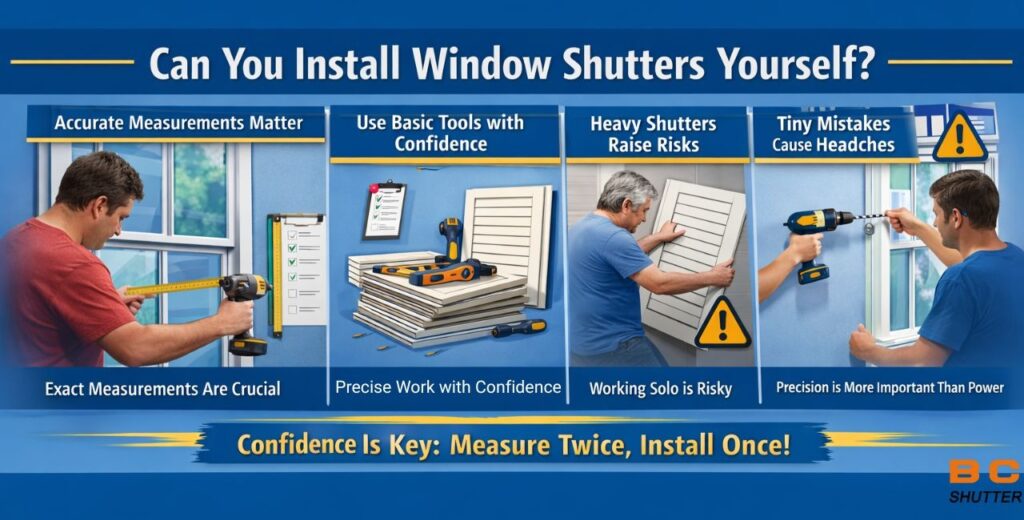
But for the most part, you need patience, accurate measuring, and control of basic tools.
Regular, flat paned windows are much simpler to deal with.
DIY operates ideally when the shutters are mild and pre-sized.
If you hurry while measuring, you can face difficulty.
What routinely occurs when drilling and not checking alignment?
Risk: Working solo with big panels.
Confidence helps, but precision matters more.
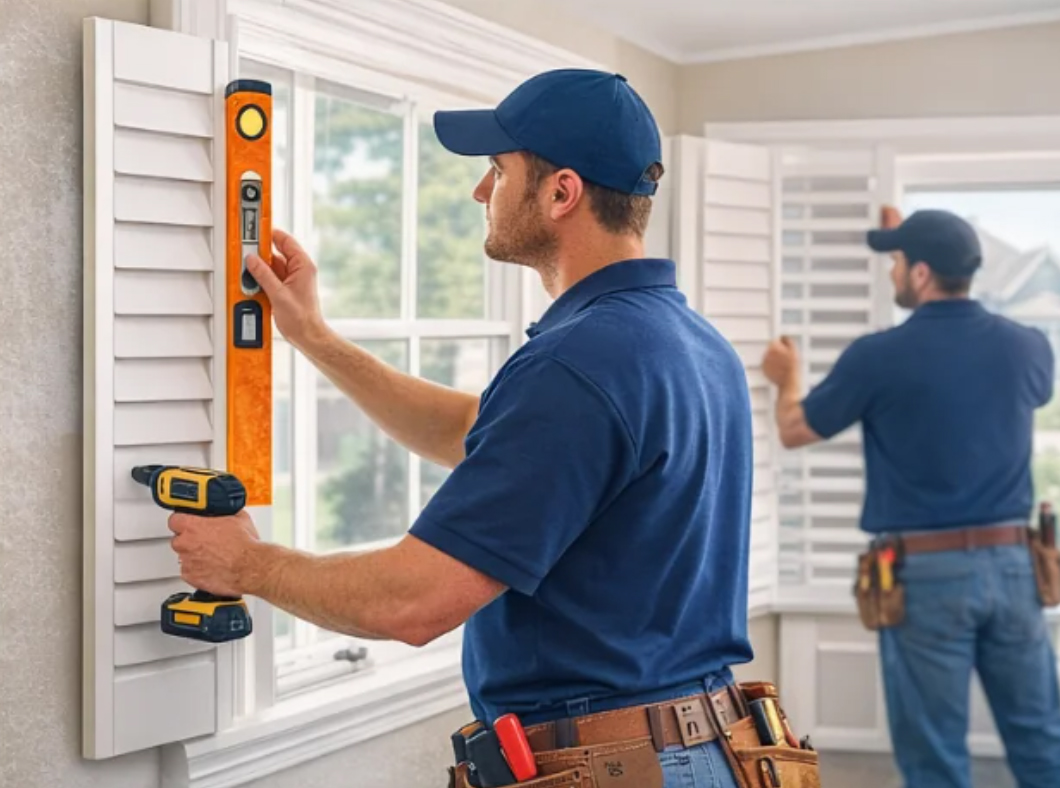
It’s doable as a DIY if you’re comfortable working with a drill and level.
When you have problems with measurements, the installation process can be so nerve-wracking.
The vast majority of DIY mistakes are not related to strength.
This is all because of the tiny inaccuracies.
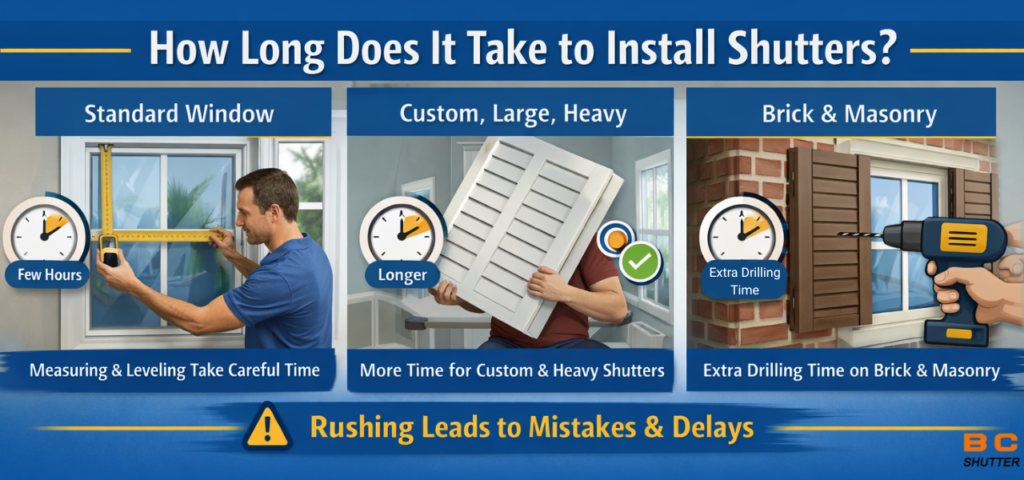
How Long Does It Take to Install Shutters?
Installing window shutters takes longer than most people expect.
The first window always takes the most time.
Measuring, marking, and leveling cannot be rushed.
These steps decide whether the shutters fit correctly.
For one standard window, installation may take a few hours.
This includes preparation and adjustment time.
Additional windows take less time once you understand the process.
Custom shutters increase installation time.
Large and heavy shutters always slow the process more.
Brick and masonry surfaces always require extra drilling time.
On the other hand, rushing installation often causes mistakes.
Mistakes increase total installation time.
DIY Installation and Professional Installation
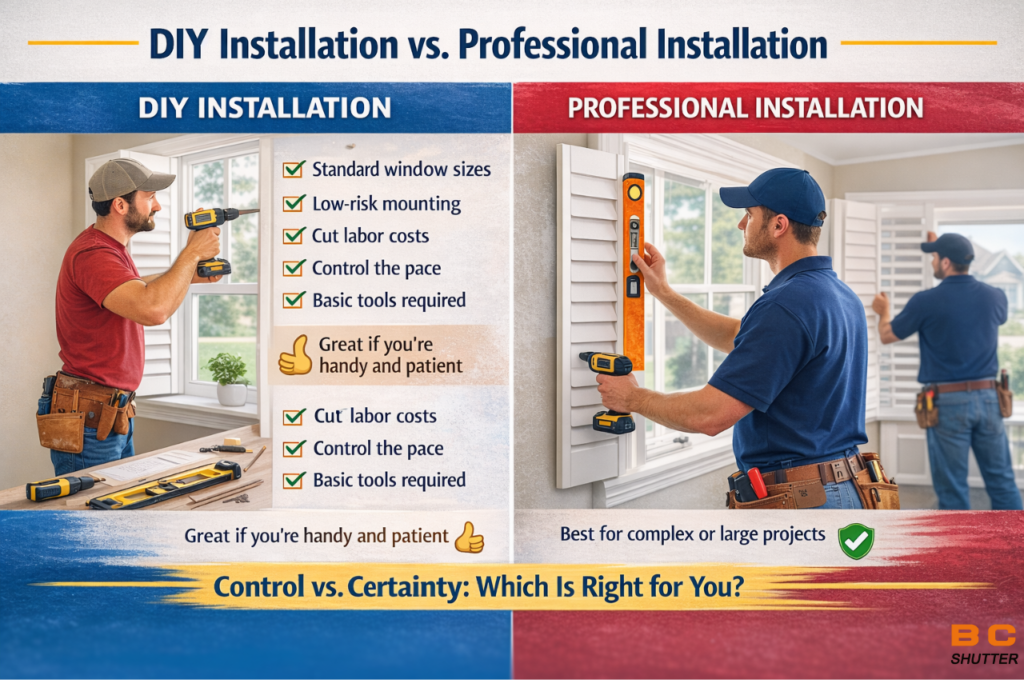
Choosing DIY vs. professional installation comes down to risk and comfort.
Either one works when the right one is chosen.
It is control versus certainty.
When DIY Installation Makes Sense
Standard window sizes are easy for a DIY installation.
Low-profile mounting does not have much risk for installation.
You can also cut labor costs.
You control the installation pace.
DIY is great if you’re confident in your measurements.
You should be comfortable with using basic tools.
You have to be okay with small learning failures.
Patience is required.
When Professional Installation Is the Better Choice
Professional installation. Installing custom shutters professionally is not only a good idea; it makes sense.
Large windows increase handling difficulty.
Experience is needed when washing surfaces such as concrete or brick.
Accuracy is more important when it comes to premium shutters.
- Professionals reduce the risk of misalignment.
- They install faster with fewer adjustments.
- Mistakes are avoided before they happen.
- This option offers peace of mind.
Common Shutter Installation Mistakes You Should Avoid
Most shutter installation problems come from simple mistakes.
These errors are common and avoidable.
Knowing them early saves time and frustration.
You may measure the window opening incorrectly.
Even small measurement errors affect the final fit.
This causes gaps or tight panels.
Shutters may not close properly.
You can ignore your level when you install.
Uneven frames make shutters drag.
Doors or panels may open or shut by themselves.
This leads to uneven wear.
You’ll submit incorrect Services without proper anchors.
When anchors aren’t clipped properly, the frame slowly stretches out over time.
Shutters can twist and catch when installed.
This often requires reinstallation.
You are able to try larger shutters on your own.
Heavy means you won’t be able to work the panels.
Hinges can misalign under weight.
Two people reduce this risk.
Frequently Asked Questions
Yes, shutters are generally more difficult to install than blinds.
Blinds can be further adjusted after installation.
Getting shutter measurements right is essential.
Once shutters are installed, fixing mistakes becomes much harder.
They can be, especially for beginners. Plantation shutters are bigger and heavier than typical window treatments, so they need careful handling. A small measuring error can affect how well the panels open and close. Proper fine-tuning is what makes them work smoothly.
In most cases, no. Shutters usually come with the handles and hardware you need. You’ll only need basic tools like a drill, level, tape measure, and screwdriver. If you’re installing masonry brick or concrete, you may need special drill bits. Using the wrong tools makes the installation harder.
Yes, you can, but it’s more challenging. These surfaces require the right anchors and careful drilling. Mistakes can cause permanent damage, which is why many people prefer hiring a professional for this type of installation.
Accurate measuring is the only way to be sure. You must measure the width, height, and depth correctly. If your windows aren’t perfectly square, the job becomes more difficult. Custom shutters help achieve a better fit but leave very little room for error.
Shutters aren’t necessarily hard to install, but they do require patience and precision. Installation becomes frustrating when measurements are rushed or the window surface is uneven. Standard windows are much easier for DIY projects. Custom or heavy shutters increase the challenge and the risk of mistakes.
If you’re patient and like having full control, DIY can work well. But if you value speed and accuracy, professional installation is usually the better option. The right choice depends on your windows, your tools, and your comfort level. Knowing this helps you avoid expensive errors.